Archives for the month of: April, 2011

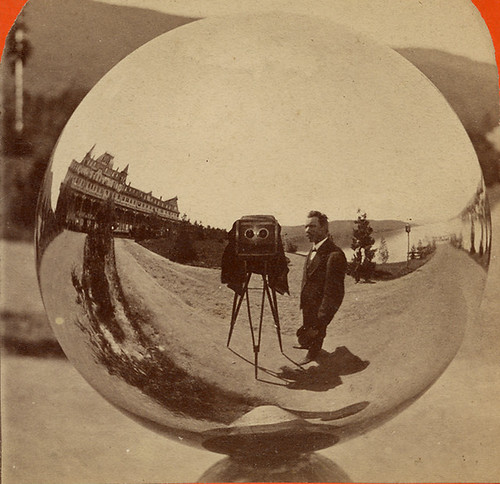
G.S. Irish, Photographer - Reflection in a Gazing Ball

From @PhotosOfThePast comes a link to an amazing collection of early photography and pre/proto-photography pictures and tech (like a set of neat pics of a camera obscura kit). Totally worth the time spent browsing. Thanks to Beverly(and her husband) for putting this together.

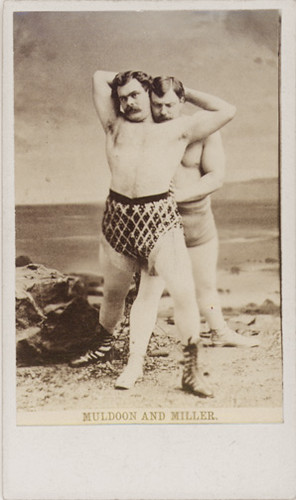
Muldoon and Miller - Wrestlers - Carte-de-visite

Who will help these Dangerous Minds?

From the School Library Journal:

Middle and high school libraries in high poverty areas of the U.S. suffered the most budget cuts in 2010, according to “State of America’s Libraries,” a report from the American Library Association.
While most school libraries managed to escape the economic trials of 2010 largely unscathed, those in high-poverty areas saw average spending on information resources and collection size decrease by 25.5 percent, or to $10,378 in 2010 from $13,935 in 2009.
The results were initially revealed in the American Association of School Librarians’ (AASL) 2010 School Libraries Count! survey, which showed that overall school expenditures on information resources were approximately $12,260 in 2010, compared to $13,525 the previous year, a decrease of 9.4-percent.
The survey also found that while schools in low-poverty areas saw slight increases in most areas of collection size, those in low-income areas reported a four percent decrease in books, an 11 percent decrease in video materials, and a whopping 22 percent decrease in periodical subscriptions.[read full post]

The report also points to the unpreparedness of these school libraries to meet future demands for digital media. There has only been a marginal shift towards digital materials. Moreover, there are genuine worries about their ability to provide on-site and remote access to electronic resources right now and down the road.

Hamstringing poorer school libraries now will make it incapacitatingly expensive to catch up. But, it’s not too late. President Obama’s education agenda involves a move away from an addiction to standardized tests and new plans to add more technology into the classroom. School libraries should be an important part of this plan.

Glistening, iPad filled libraries in poorer schools may be a dream. Still, considering the front-line role libraries played in bringing the internet to schools, letting them desiccate is a significant step in the wrong direction.

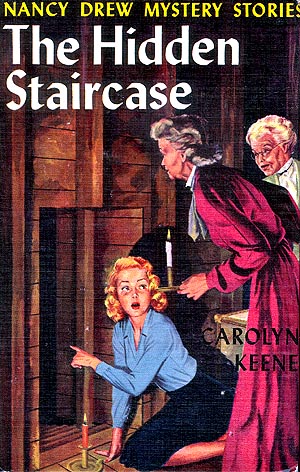
Happily, every Nancy Drew title is an innuendo.

A librarian is in the news. Not because of budget cuts, literacy or eBooks, but for something much more fun – some good ol’fashioned mystery:

A former Brown University museum librarian who once examined a Tiffany-silver sword now at the center of an ownership duel between the Ivy league school and a Virginia collector says in an affidavit “there is no doubt” university drawings match photos of the sword located last year in a Virginia museum.
The affidavit by John H. Stanley is among supporting documents in Brown’s filing. Brown has asked a judge to reject a motion by the lawyer for Donald R. and Toni M. Tharpe, of Williamsburg, Va., to dismiss the university’s lawsuit in U.S. District Court for the Eastern District of Virginia. Brown wants what it says is its long-missing sword returned. A Sept. 7 trial is scheduled.
At issue is a sword presented in 1863 to Col. Rush C. Hawkins, of a New York Civil War regiment. It was later part of the Annmary Brown Memorial at Brown in memory of Hawkins’ wife, who was a granddaughter of a founder of the university.[read full article]

This story also requires: an abandoned library building, some people who seem creepily yet appear innocent (at first), and a shaky flashlight chase down a dark secret tunnel. The heart races, no?

Timber Timbre - scarifying in the best ways

Friday’s here. So are the highlights from my data-fixing soundtrack this week.

Timber Timbre‘s new album Creep On Creepin’ On dropped this week. It’s great and creepy (as advertised). I’d describe it as like a musical composed of Nina Simone’s darker songs and directed by Tim Burton.

I like this Midlake song. The Trials of Van Occupanther was one of my favourites back in 2006. And why? This track  maps somewhere between ELO and Fleetwood Mac. They also seem to love singing about 19th century life and love.  And occasionally, they drop a Hobbes reference. All this appeals to me.

Have a great weekend!

It’s Friday, and if you’re wondering what as a good librarian you should be doing, @pcsweeney has a suggestion: party.  Here’s why:

One of the first things that JP said to me about the profession of librarianship and the whole party hard theory was to the effect of needing to celebrate our profession more instead of mourning it. This really hit home for me at the time it was said because I was just reading about layoffs, libraries closing, hours lost, budgets cut, etc… I really feel like there are quite a few people who are quietly mourning the loss of this profession. But there’s no reason that we need to go out quietly. If we do really wind up going out, we should go out loud, kicking, screaming, and celebrating everything that libraries have done for the people of this country for the last 236 years. Really, our fellow librarians have accomplished a whole lot when you sit back and think about it! So now let’s celebrate it![full post]

I get where this is coming from, but should we all stamp around with pints shouting the Anthem for the Already Defeated? Not just yet, though it is a good song.  I really believe the librarian profession has and always will be a process of evolution. There are new job titles, new technologies, but the spirit is always there.

Sweeney gets this and wants to use partying as a tool. Partying facilitates social collaboration; it builds networks and creates roads for innovation. (Depending on consumption levels, some can be more innovative than others. Yet, as Hemmingway says, “Always do sober what you said you’d do drunk. That will teach you to keep your mouth shut.” Or why you shouldn’t!)

Informal outreach like Sweeney suggests (maybe not always with beers involved) can create a different sort of outcome than you get from more formal approaches like surveys and or interacting with patrons in library.

This is especially important for public libraries (but not just public libraries), where community and social integration can mean as much for improving services as for survival.

The Librarian Party Agenda: honour the past, live the present, celebrate the future. Something to consider.

Cheers!

This was my second choice for a post pic... amazing, right? Fun times!

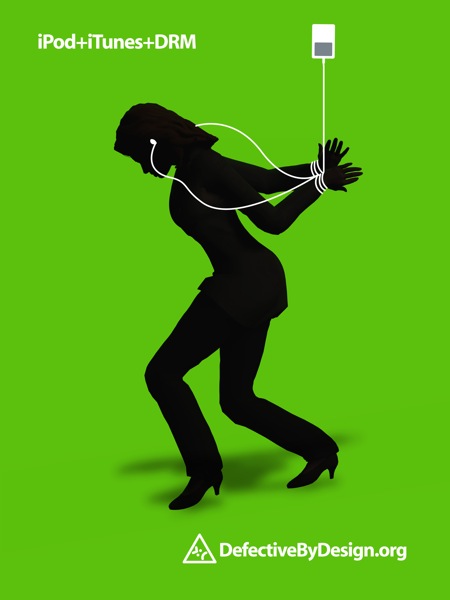
The anti-DRM site Defective by Design has declared Wednesday  May 4, 2011 as the third annual International Day Against DRM.

The Day Against DRM is an opportunity to unite a wide range of projects, public interest organizations, web sites and individuals in an effort to raise public awareness to the danger of technology that requires users to give-up control of their computers or that restricts access to digital data and media. This year, we’ll be helping individuals and groups work together to create local actions in their communities — actions will range from protesting an unfriendly hardware vendor to handing out informative fliers at local public libraries!

DefectiveByDesign.org wants to help you plan or get involved in local actions and then broadcast your stories globally. If you are interested in taking part in this year’s Day Against DRM:

It’s definitely something worth participating in, or at least looking into.

Defective by Design’s crew and libraries have shared the struggle before. As DbD says in that post,

Readers, librarians, and authors need to make their voices heard. DRM leaves readers and librarians helpless and divided. If we do not ban DRM from our libraries and our lives then we can and should expect publishers such as Harper Collins to strangle libraries so as to gain as much of a profit as possible.

We need to watch out for each other and make sure that people are not getting suckered into notions of “fair” DRM.

There’s no better way to do this than through collective action:  sign up, read up, and/or act up.

In February, the Globe and Mail ran an article proclaiming the pending demise of eBook piracy. The nails in the coffin were eBook lending sites like Lendle. It took just over a month from that article for Amazon.com to put the breaks on that.

Now, Amazon’s lending restrictions on Lendle basically make lending eBooks an activity for speed readers who prefer random, unpopular books. I suppose in light of those events, eBook piracy will live a little longer. Especially if borrowing eBooks and eAudiobooks  legitimately continues to be unfriendly to users.

My personal experience with OverDrive (the unchallenged content software for eBook excited libraries) via the Ottawa Public Library hasn’t made me (and a lot of other people) optimistic . To download to an audiobook, it required so much hoop jumping and the installation of  software that I gave up. eBooks work a little easier, but it’s still not a smooth process.

Out of curiosity, I found the same audiobook on a popular torrent site in about 30 seconds. It had enough people actively sharing the file that it could have probably downloaded in a few hours. After which, were I so inclined, I’d have unlimited use of the audio files for as long as I wanted and on any platform I wanted.

I imagine the process on a Kindle or Kobo or whatever must be strikingly easier than using OverDrive. Publishers have a clear interest in making lending more difficult for libraries or collaboration minded groups of  individuals. The Globe article had a fairly telling quote on that matter:

Not all publishers are assured [about eBook lending sites, including libraries/OverDrive], including Macmillan U.S., whose president Brian Napack recently defended his company’s go-slow policy at a conference in New York. “The fear is I get one library card and never have to buy a book again,” he said.

If you want to make money, sharing (legal or otherwise) is the worst possible business model. So of course publishers want a few roadblocks.

But, those roadblocks essentially treat would-be borrowers as would-be pirates.  The outcome for users being one of three things, paying for the eBook, putting up with  second class free service/access at dwindling levels of quality, or pursuing less “legitimate” means of access. (I guess you could use a mix of these three.)

If past experience with the music industry has shown anything, it’s that increasingly draconian attitudes do not translate into sales. It seems to me, that those who pay for eBook access were going to pay anyways. Everyone else? Well, there are three choices.

An interesting post from Aaron Schmidt at Walking Paper on the merits of simplified library web sites.

Antoine de Saint-Exupery, a daring pilot and talented author, also weighed in on user experience:

“In anything at all, perfection is finally attained not when there is no longer anything to add, but when there is no longer anything to take away.”

In some ways, libraries have been taking the opposite approach. We’ve gotten in the habit of tacking on new services and taking on new responsibilities, and many library websites can be seen as piecemeal collections of patron engagement tactics…

There are two ways to increase the amount of attention the bits of a website receive: either by increasing staffing and funding, or reducing the number of bits. An extreme example: imagine if your web team was only responsible for the page consisting of your library’s contact information, location, and one book recommendation per week. They’d be able to spend plenty of time on this page, testing, experimenting, and revising regularly. It would be a great page.

For years, I’ve heard talk about libraries cutting the cord on irrelevant services. Yet I haven’t heard as much discussion about which sacred web cows we can put out to pasture. This might in part be owing to the perception that a 200-page website isn’t more expensive to manage than a 50-page one. While probably true in terms of hosting fees, it isn’t otherwise true. Good content takes staff time to produce and arrange, and the navigational overhead can be a time expenditure for users.

I’m not suggesting that libraries shouldn’t try new things or add content to their sites. They should. Still, the library world needs to start a dialog about an additional way to prevent stagnation: subtraction.[read the full post]

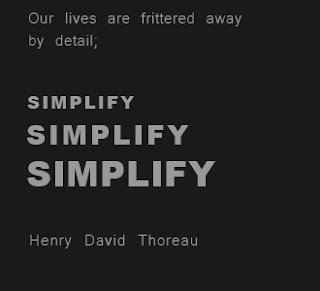
People following this blog know my affection for minimalism as a creative conceit. Apart from aesthetics, I really believe there’s merit to simplifying library online experiences (something I’ve argued for in the past).

Schmidt takes aim at the current library web-design ethos of trying to stake as much online territory as possible. But, enthusiasm and ambition can be a downfall. There are many library landing pages with so many content and navigation options that it’s difficult to really find specific things. Read the rest of this entry »

Holy Ghost pause for a photo

Library SoundTrack Friday is here, and it’s time for some indie-pop-electronica!

Hello, Holy Ghost! These guys are making some seriously fun retro-electro-pop that, incidentally, I’ll be seeing soon (backing up Cut Copy!).


If 1984 calls, tell them thanks.

I’ve listened to Caribou a lot this week. It’s a good mix for the office: upbeat, soothing, a generally rich tapestry of sounds. “Jamelia” is the closer to his fantastic and justifiably well received album, Swim.

Oh, and in tribute to the “last” concert of their “last” tour, here’s my fav LCD Soundsystem track.

Have a great weekend!